AI Rendering for Architects: How It Actually Works in 2026
18 July 2026 · 6 min read
For decades, photorealistic rendering meant one thing: hours of modeling, material tweaking and render-farm waiting. In 2026 that equation has changed. Modern AI rendering turns a hand sketch, a CAD export or a phone photo into a presentation-ready image in about 13 seconds — and the interesting question is no longer whether the quality is good enough, but how to fit this speed into a professional workflow.
What AI rendering does well today
- Concept visualization: turning early sketches into client-ready images during the meeting, not after it.
- Material studies: swapping a floor from ceramic to oak herringbone, or a facade from plaster to wood cladding, in seconds per variant.
- Lighting scenarios: the same space at midday, golden hour and dusk, without re-rendering from scratch.
- Motion: short cinematic clips generated from a single still, useful for social media and client presentations.
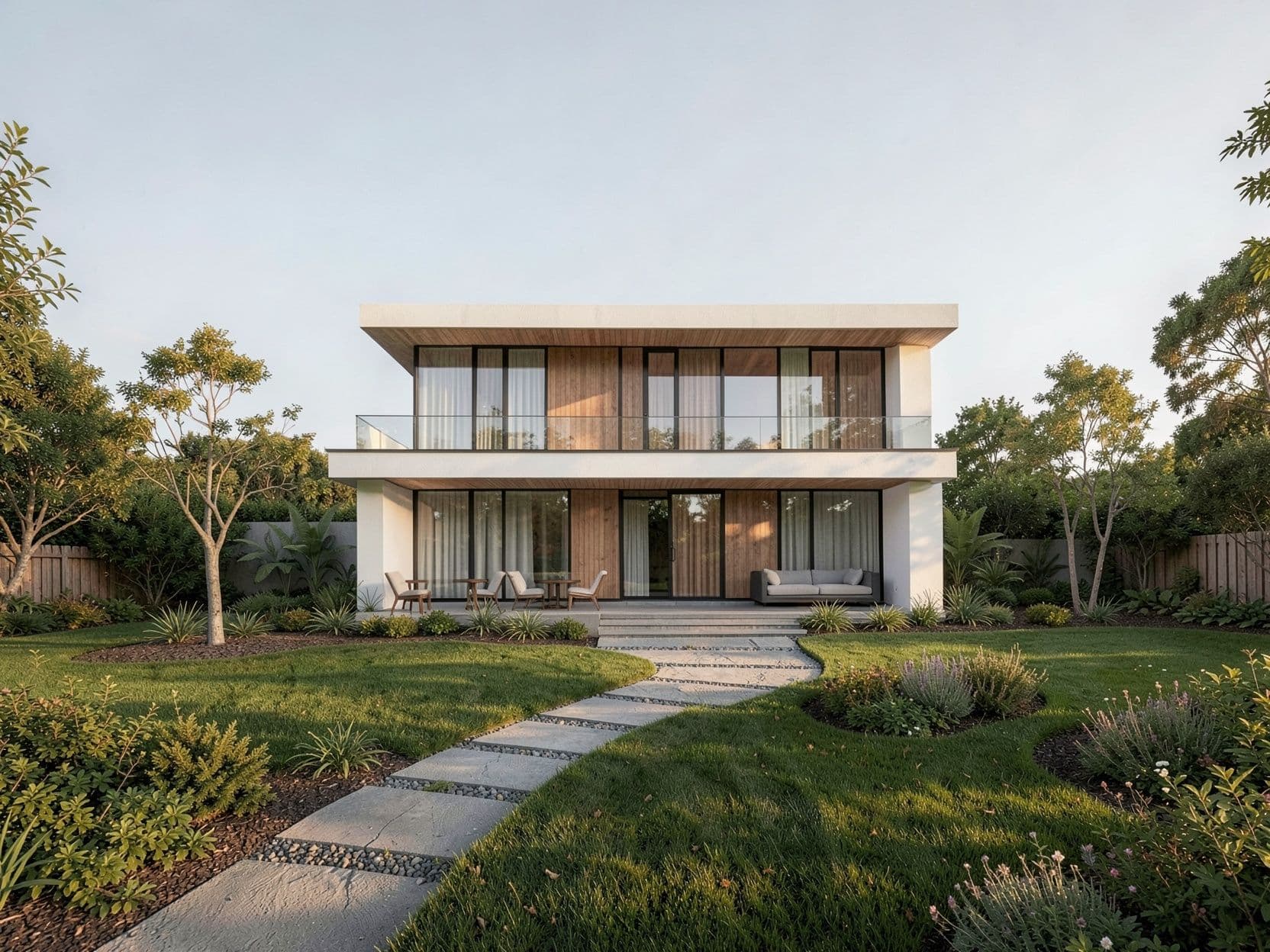
The conversational shift
The first generation of AI rendering tools looked like slot machines: upload, pray, download. The current generation works like a conversation. You upload a photo of a kitchen and type 'change the island countertop to Calacatta marble'. The AI understands which tool to use — masked material replacement, not a full re-render — and the rest of the image stays untouched, pixel for pixel. Each result becomes the starting point for the next instruction, exactly like briefing a junior designer.
What it doesn't replace
AI renders are approximations of an intent, not construction documents. Dimensions are not guaranteed, details drift between generations, and building regulations do not care how photorealistic your image is. The professionals getting the most out of these tools use them where speed matters — concept, options, mood — and keep traditional pipelines where precision matters.
Where the economics land
A traditional exterior render from a visualization studio costs €250–800 and takes days. A V-Ray seat runs €500+ per year plus the hardware and the learning curve. AI rendering platforms land at €19–150 per month with per-image costs measured in cents. For early-stage design communication — which is most of what clients actually see — the cost argument is over.
Try it on your own project
The fastest way to evaluate AI rendering is not a benchmark: it's your own half-finished sketch. Upload it, describe the mood you're after, and judge the result against what you would have shown the client otherwise. That comparison — your real work, presented better and earlier — is the entire pitch.
See it on your own project
Try the demo